Source Indoor Cat Tree With Dangling Ball for Play, Rest, and Scratching
Explore 30 listings for an indoor cat tree with dangling ball designed for large cats. Buyers can compare wooden and plush models with varying dimensions, weights, and customization options to find the best fit for their needs; compare the available evidence and request quotations based on your requirements.
Key considerations
Products List


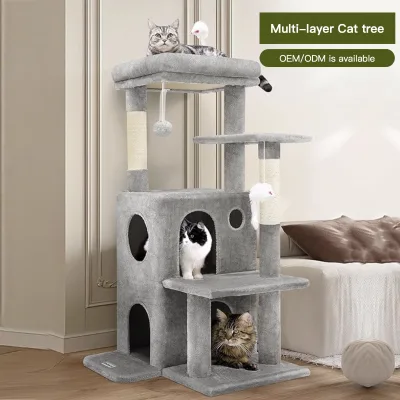
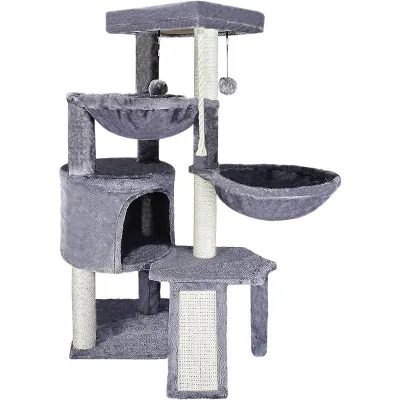


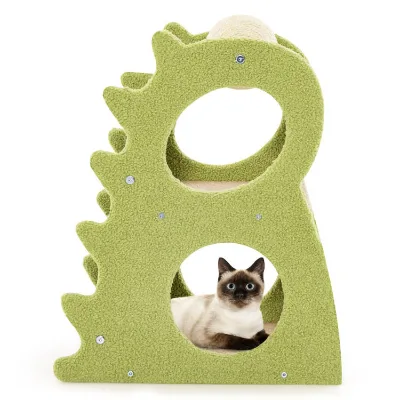


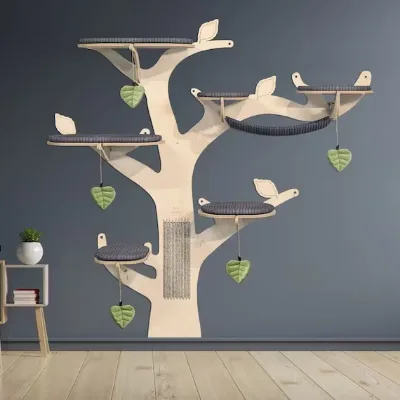
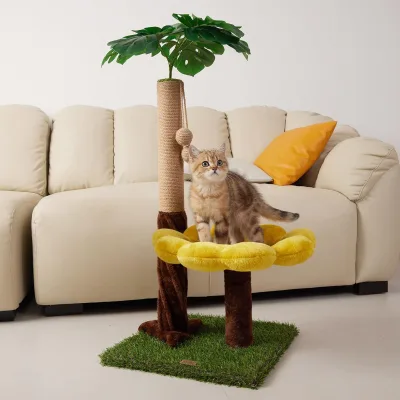

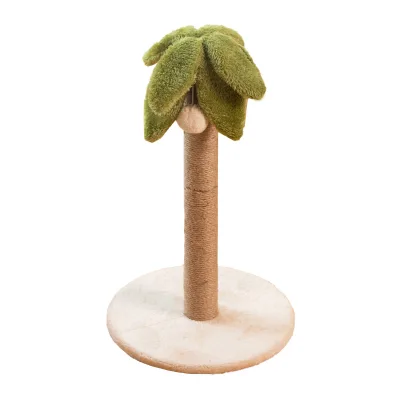
Comprehensive Sourcing Guide
Indoor Cat Tree with Dangling Ball Sourcing Guide
Procuring indoor cat trees with dangling balls requires a strategic approach to balancing structural stability with engaging interactive features. Buyers must prioritize models designed for large cats, as these units typically offer the necessary height and weight capacity to support active play without tipping. The observed product range indicates a strong emphasis on plush and wooden materials, which provide a soft landing surface while maintaining a rigid core structure. This combination is essential for preventing collapse during vigorous scratching or jumping, ensuring the safety of both the pet and the surrounding indoor environment.
Sourcing decisions should also account for the specific dimensions and customization options available from manufacturers. Listings show varying product dimensions, such as 21.7"L X 19.7"W X 31.5"H and larger variants up to 56.3"H, allowing buyers to select units that fit specific room layouts. The availability of OEM/ODM services and logo printing enables brands to create unique product identities. Buyers should verify that the dangling ball attachments are securely fastened to withstand repeated pulling, as loose components can pose a choking hazard or reduce the product's lifespan.
Product Scope and Observed Listing Signals
The current market for indoor cat trees features a diverse array of models, with observed listings ranging from compact units to tall, multi-level structures. Key attributes include materials like faux fur, jute, and particle board, which cater to different aesthetic and functional preferences. The presence of specific model numbers, such as TK-CT-016 and RT-CB-072-J, suggests a standardized production framework among suppliers. Buyers should note that while many products are labeled for indoor use, the actual durability depends on the quality of the sisal wrapping and the stability of the base, which must be verified through detailed product specifications.
Color options and customization capabilities are significant differentiators in this category. Observed listings include gray and pink variants, with explicit mentions of customized logo printing and private label services. This flexibility allows retailers to align product designs with their brand identity or seasonal marketing campaigns. However, buyers must ensure that the customization process does not compromise the structural integrity of the tree. The inclusion of features like dangling balls adds an interactive element, but the attachment mechanism must be robust enough to handle the dynamic forces generated by large cats during play.
Technical Specifications to Verify
When evaluating technical specifications, buyers must focus on the material composition and dimensional accuracy of the cat trees. The use of E1 particle board and teddy plush is common, providing a balance between cost-efficiency and comfort. However, the density of the particle board and the thickness of the plush covering are critical factors that determine the unit's longevity. Buyers should request detailed material certificates to ensure that the wood products meet formaldehyde emission standards, particularly for indoor environments where air quality is a concern. Additionally, the weight of the unit, observed to range from 3.5kg to 13kg, indicates the level of stability provided, with heavier units generally offering better resistance to tipping.
Dimensional specifications vary significantly across different models, requiring careful selection based on the target market's living space constraints. For instance, some models measure 16.53"L X 15.74"W X 30.3"H, while others extend to 21.7"L X 17.7"W X 56.3"H. Buyers must verify that the listed dimensions match the actual product, as discrepancies can lead to customer dissatisfaction and return issues. The packing dimensions, such as 181824 CM or 404048, also impact logistics costs and storage requirements. Ensuring that the dangling ball is securely attached and made from non-toxic materials is another crucial technical check to prevent safety hazards.
Compliance and Safety Documentation
Safety compliance is paramount when sourcing cat trees, especially those with small detachable parts like dangling balls. Buyers must ensure that suppliers provide documentation confirming that all materials, including plush fabrics and sisal ropes, are free from harmful chemicals such as lead, phthalates, and formaldehyde. While FSC certification is mentioned in background data, buyers should verify the current status of this certification for specific product lines to ensure sustainable sourcing practices. Additionally, compliance with international toy safety standards, such as ASTM F963 or EN71, may be relevant for assessing the safety of the dangling components, even though the primary product is a pet accessory.
Documentation should also include test reports for structural stability and durability. Buyers should request evidence that the cat tree can withstand repeated jumping and scratching without structural failure. This includes verifying the strength of the connections between the base, posts, and platforms. For products marketed for large cats, the load-bearing capacity must be clearly defined and tested. Suppliers should provide clear instructions for assembly and maintenance, ensuring that customers can properly secure the dangling ball and other interactive elements. This proactive approach to safety documentation helps mitigate liability risks and enhances customer trust in the product's reliability.
Cost Drivers and Commercial Terms
Several factors influence the cost structure of indoor cat trees with dangling balls, including material selection, customization requirements, and order volume. The use of premium materials like high-density particle board and thick plush increases production costs but enhances product durability and perceived value. Customization options, such as logo printing and specific color choices, add complexity to the manufacturing process, potentially leading to higher unit prices. Buyers should negotiate clear pricing tiers based on MOQs, which range from 1 to 1000 units, to optimize cost efficiency for different order sizes. Understanding these cost drivers allows buyers to make informed decisions about material trade-offs and customization levels.
Commercial terms, including packing methods and shipping arrangements, also play a significant role in the total landed cost. Observed packing options include FOB terms and carton packaging, which affect logistics planning and insurance requirements. Buyers should clarify whether the quoted prices include packaging materials and whether they are subject to change based on raw material fluctuations. Additionally, lead times and payment terms should be explicitly defined in the contract to avoid delays and cash flow issues. For OEM/ODM projects, buyers must account for the costs associated with mold creation or design adjustments, which can impact the overall budget. Transparent communication about these commercial terms ensures a smoother procurement process.
Supplier Qualification and Quality Control
Selecting a reliable supplier is critical for ensuring consistent product quality and timely delivery. Buyers should conduct thorough due diligence on potential suppliers, verifying their manufacturing capabilities, quality control processes, and past performance. Suppliers with experience in producing cat trees for large cats and those offering OEM/ODM services are often better equipped to handle complex customization requests. It is advisable to request samples of different models to assess the quality of materials, stitching, and assembly. Buyers should also inquire about the supplier's quality control protocols, including in-process inspections and final random inspections, to ensure that defects are identified and corrected before shipment.
Establishing a robust quality control plan is essential for maintaining product standards across large orders. Buyers should define clear acceptance criteria for key attributes such as material thickness, dimensional accuracy, and the security of dangling ball attachments. Regular audits of the supplier's production facility can help identify potential issues early in the manufacturing process. Additionally, buyers should implement a sampling plan for incoming shipments to verify that the delivered products meet the agreed-upon specifications. Building a strong relationship with the supplier through open communication and collaborative problem-solving can lead to continuous improvement and better product outcomes.
Long-Term Procurement Checks
Long-term procurement success depends on continuous monitoring of supplier performance and market trends. Buyers should regularly review supplier metrics, including on-time delivery rates, defect rates, and responsiveness to issues. This data-driven approach helps identify underperforming suppliers and facilitates timely corrective actions. Additionally, staying informed about changes in material costs, regulatory requirements, and consumer preferences allows buyers to adapt their sourcing strategies proactively. For instance, increasing demand for sustainable materials may necessitate exploring suppliers with stronger environmental certifications. Regularly updating product specifications and quality standards ensures that the sourced cat trees remain competitive and compliant with evolving market expectations.
Building a diversified supplier base is another key strategy for mitigating risk and ensuring supply chain resilience. Relying on a single supplier can expose buyers to disruptions caused by production delays, quality issues, or geopolitical factors. By qualifying multiple suppliers, buyers can maintain flexibility in their sourcing decisions and negotiate better terms. Long-term partnerships with reliable suppliers can also lead to volume discounts and priority treatment during peak seasons. Furthermore, engaging in joint product development initiatives with suppliers can result in innovative designs and improved functionality, such as more durable dangling ball attachments. This collaborative approach fosters mutual growth and strengthens the overall procurement ecosystem.
FAQs
What materials are commonly used for an indoor cat tree with dangling ball?
Common materials include plush or faux fur coverings, sisal rope for scratching surfaces, and wooden or E1 particle board frames. Plush gives cats a soft resting surface, while sisal posts support healthy claw maintenance. Listings in this category also show jute and teddy plush variants, so buyers can match materials to durability needs and indoor styling preferences.
Can I customize the design and logo on an indoor cat tree with dangling ball?
Yes, customization is generally available in this category. Many listings advertise OEM and ODM service, private label options, and logo printing, so you can add your brand identity before shipment. Customization typically covers color, packaging, and branding elements. Confirm minimum order requirements and artwork formats with the supplier before placing a customized indoor cat tree order.
Which indoor cat tree with dangling ball suits large cats best?
Choose a model explicitly rated for large cats, with sturdy wooden construction and stable platforms. Larger frames such as dimensions around 21.7 by 19.7 by 31.5 inches give big cats room to climb and rest safely. Check the listed net weight and base width, since heavier, wider bases reduce tipping when a large cat jumps or plays.
How much space do I need for an indoor cat tree with dangling ball?
Measure your floor area and ceiling height before ordering. Listed models in this category range from about 16.5 by 12.6 by 40.5 inches up to 21.7 by 17.7 by 56.3 inches tall. Allow clearance around the tree so cats can jump safely, and note packed carton sizes like 40 by 40 by 48 centimeters for storage planning.
What is the typical MOQ range when sourcing an indoor cat tree with dangling ball?
Listed minimum order quantities in this category range from 1 to 1000 pieces, which is wide because suppliers serve both small buyers and bulk distributors. Lower MOQs usually apply to ready-made stock, while customized or logo-printed orders often require higher volumes. Negotiate MOQ alongside pricing, packaging, and lead time during your supplier discussions.
Can an indoor cat tree with dangling ball serve scratching, playing, and resting functions?
Yes, many models are designed for scratching, playing, and resting in one unit. Sisal or jute posts handle claw maintenance, the dangling ball encourages active play, and plush platforms or condos provide resting spots. This combination suits indoor cats of all seasons and activity levels, so check each listing's stated functions to confirm the model covers all three uses.
Where are indoor cat tree with dangling ball products mainly produced?
Listings in this category indicate production in China, with Zhejiang appearing as a documented place of origin. Chinese suppliers in this segment commonly offer OEM and ODM services and export packing such as carton or FOB terms. When comparing options, review each supplier's stated origin, packing standard, and model numbers to evaluate consistency across candidates.